
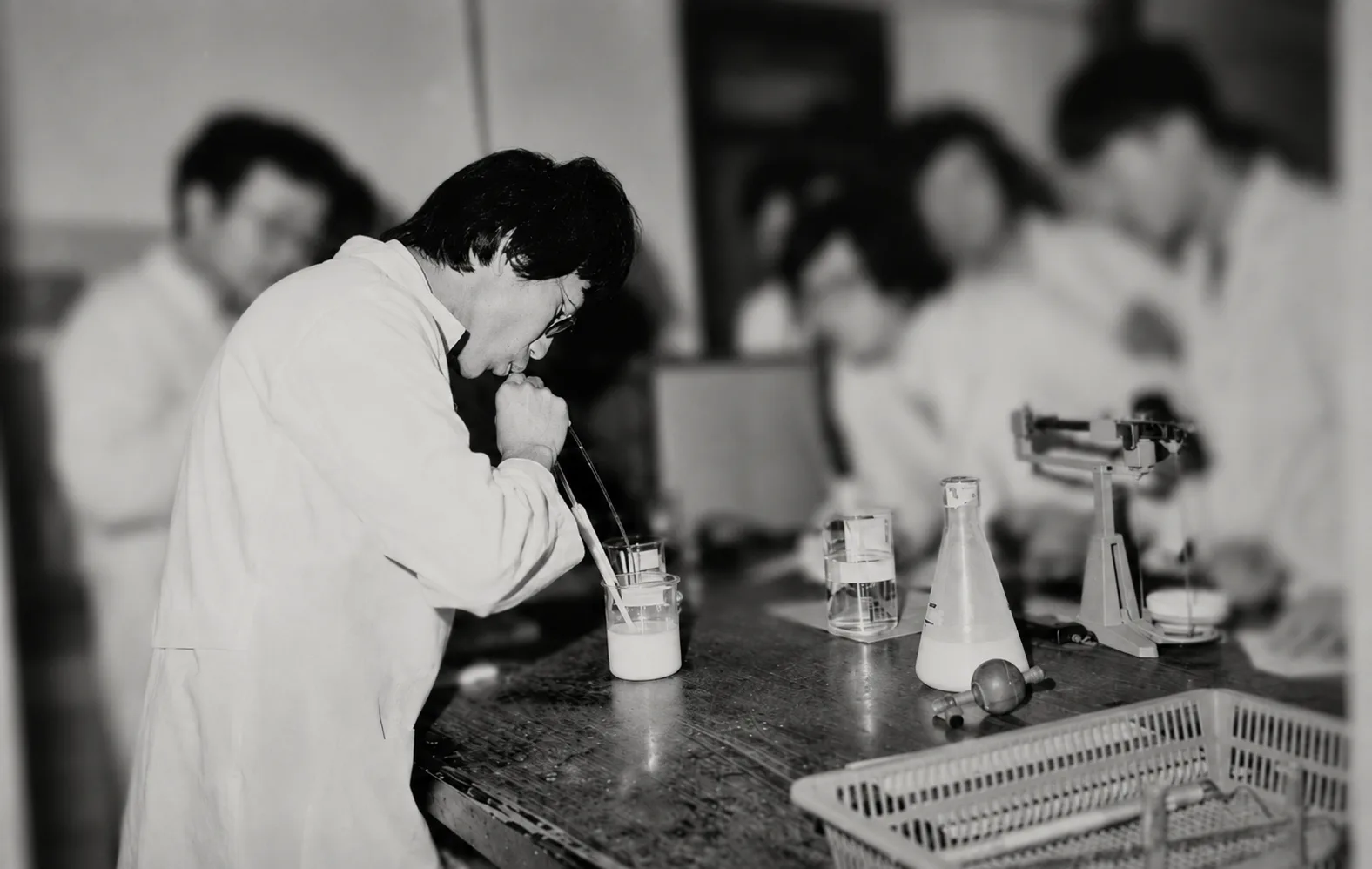
When Vicell ferments it, it becomes a different ingredient.
See what changes by ingredientWhat happens when exactly the right microorganism ferments it?
- BREAK DOWN
Large molecules you cannot digest become small
- CONVERT
Beneficial fermentation metabolites are created
- CREATE
Antibacterial and antioxidant compounds that fight harmful bacteria and inflammation are created
- TRANSFORM
Taste, aroma and format change
- EXPAND
Functional compounds are expressed
Proper fermentation starts with knowing the material and the microorganism.
- STEP 01
Material review
- STEP 02
Strain selection
- STEP 03
Fermentation design
- STEP 04
Analysis
- STEP 05
Productization
Before you look for a new ingredient, look again at the one you already have
Most development problems are solved by using the current material differently, not by sourcing a new one.
- If this sounds familiar Ingredient costs keep risingFermentation answers it this way We convert the existing material through fermentation so the same input carries more value.
- If this sounds familiar Inventory and by-products pile upFermentation answers it this way Surplus material and by-products are redesigned as fermented ingredients and returned to the product line.
- If this sounds familiar Taste and odor cap the inclusion rateFermentation answers it this way We reduce off notes and rebalance aroma so the formulation limit can move up.
- If this sounds familiar There is no evidence behind the claimsFermentation answers it this way We analyze compositional change before and after fermentation to build usable data.
- If this sounds familiar Nothing separates you from competitorsFermentation answers it this way Strain and fermentation conditions combine into a specification that is hard to copy.
What changes after fermentation?
- RAW
Soy as received
Rich in protein, but the fermentation conditions are demanding. Taste and functionality are hard to keep at the same time.
- FERMENTATION
Tailored fermentation
Fermented with strains and conditions that keep the function of soy while improving taste and format.
- NEW VALUE
Postbiotic fermented soy
The strengths of soy plus new fermentation metabolites, broken down into amino acids for maximum nutrition and function.
- RAW
Red ginseng as received
About 25 percent of the population cannot take in ginsenosides, its main component.
- FERMENTATION
Tailored fermentation
Produced with strains screened for fresh and red ginseng fermentation under optimal conditions.
- NEW VALUE
Postbiotic fermented red ginseng
Large molecules are broken down, so absorption goes up. Fermentation metabolites raise functionality. Ginsenosides convert to Rg3 and compound K.
Create something new through fermentation
Tell us the material you hold and what you want to change, and we will review the fermentation potential and reply with the likely direction.